
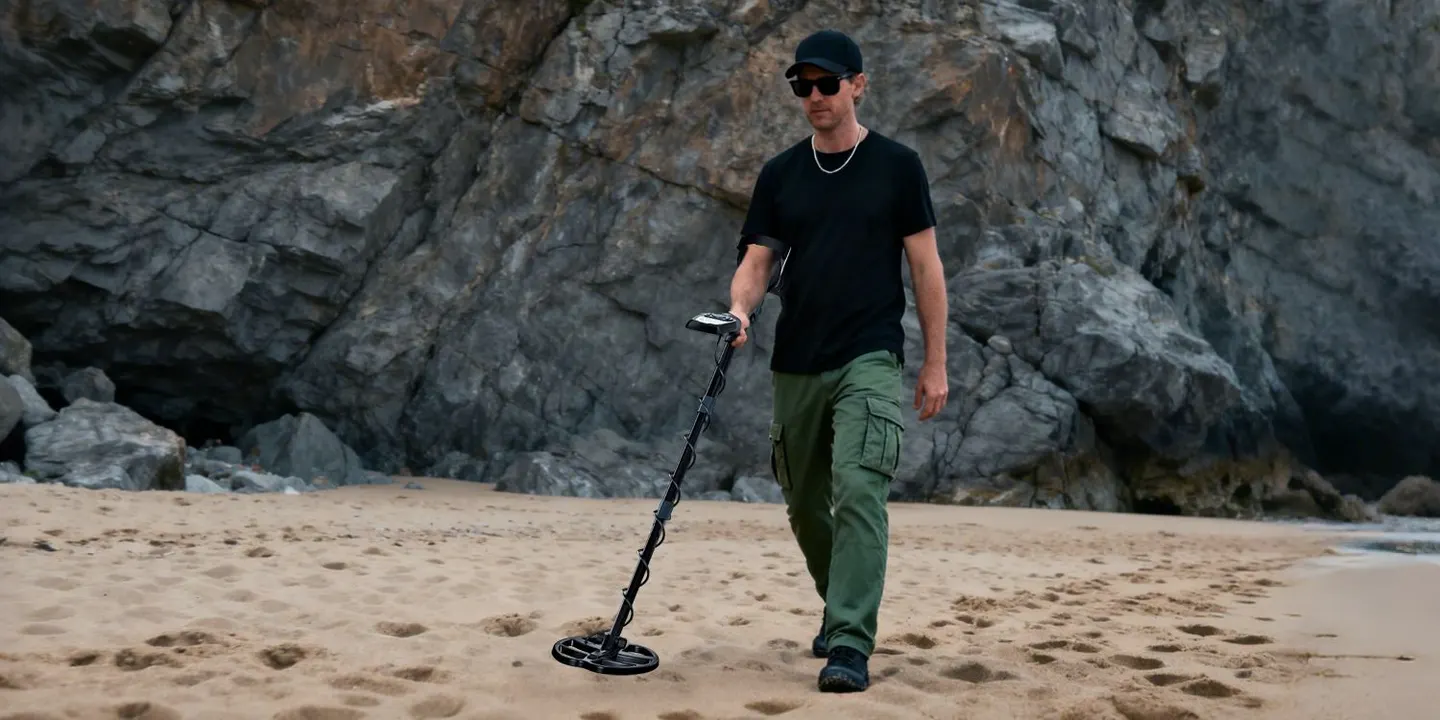
The first question new SUNPOW owners ask is rarely about coil size. It is about the park down the road. Can I take the detector there? Do I need a permit? Can I keep what I find? The honest answer is that it depends on who owns or manages the ground under your feet, and in the United States that can change every few hundred yards.
This guide walks through the main kinds of land, from the strictest to the most open, using the words of the rules themselves. It is a starting point, not legal advice. Before you dig anywhere new, read the posted rules or ask the office that runs the place.
National parks: leave the detector in the car
National parks are the clearest case. The federal rule that protects their natural and cultural resources lists, among the things you may not do, this one:
“(7) Possessing or using a mineral or metal detector, magnetometer, side scan sonar, other metal detecting device, or subbottom profiler.”
Note the word possessing. You do not have to be sweeping a coil for the rule to apply. The same section carves out one practical exception: a detector you are only carrying through. It allows a device that is broken down and stored or packed so it cannot be used while you are in the park. If you are driving through a national park on the way to a beach, fold the stem, pack the coil, and keep it that way.
National monuments, battlefields and historic sites run by the National Park Service fall under the same rule. That includes many Civil War sites, which is exactly where some people most want to search. Do not. The penalties are real, and the history in that ground belongs to everyone.
Federal land and anything older than 100 years
Outside the parks, a much broader federal law shapes what you can dig up on public land. The Archaeological Resources Protection Act, usually shortened to ARPA, says:
“No person may excavate, remove, damage, or otherwise alter or deface, or attempt to excavate, remove, damage, or otherwise alter or deface any archaeological resource located on public lands or Indian lands unless such activity is pursuant to a permit”
What counts as an archaeological resource? The law lists pottery, bottles, weapons, tools, structures and graves, among other remains of past human life, and then sets an age line:
“No item shall be treated as an archaeological resource under regulations under this paragraph unless such item is at least 100 years of age.”
In practice, that gives detectorists a simple working rule on federal and tribal land: modern coins and lost jewelry are one thing, anything that looks a century old is another. A first offense can bring a fine of up to $10,000, a year in prison, or both. Permits to excavate do exist, but they go to qualified people doing work in the public interest, not to hobby hunters.
| Kind of find | Usually fine to keep on open public land | Leave it and report it |
|---|---|---|
| Coins | Modern coins and pocket change | Coins more than 100 years old |
| Jewelry | Recently lost rings, chains, earrings | Old jewelry from a historic site |
| Relics | Pull tabs, bottle caps, modern trash (take it out) | Tools, buttons, bullets, bottles of historic age |
| Gold | Nuggets found with hand tools where prospecting is open | Anything inside a historic mining camp or townsite |
BLM land: the most open public ground
The Bureau of Land Management looks after a large share of the West, and its rules are the friendliest to detecting. Federal mining regulations define casual use as activity with little or no disturbance, and they name detectors directly:
“It also generally includes use of metal detectors, gold spears and other battery-operated devices for sensing the presence of minerals, and hand and battery-operated drywashers.”
A leaflet from the BLM in Nevada puts it in plainer terms, and adds the line about age that ARPA draws:
“Metal detector use is allowed on public lands. Modern money may be collected, but coins and artifacts more than 100 years old may not be collected.”
There are still closed spots inside BLM ground: wilderness areas, historic cabins, old townsites and mining camps. Check with the local field office before you plan a trip around a ghost town, because those are the places most likely to be off limits.
National forests: modern finds, shallow holes
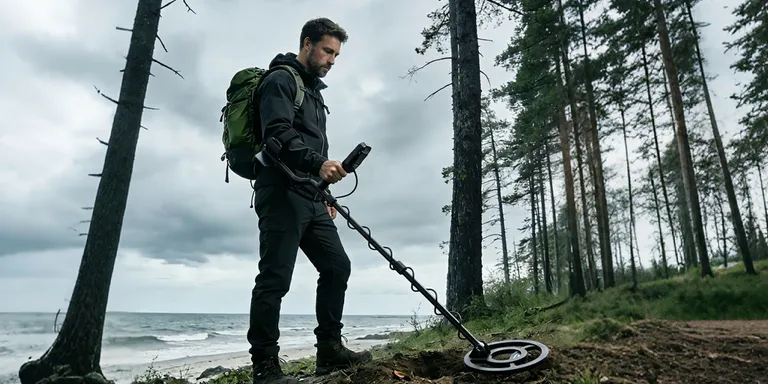
The U.S. Forest Service publishes a short page on detecting that is worth reading in full. Its core permission is clear:
“You may search for small, modern items such as coins or jewelry and dig shallow holes that you can fully backfill.”
The page also notes that detecting is usually allowed in developed recreation sites such as campgrounds, picnic areas and swimming beaches, unless a posted rule says otherwise. And it tells you what to do if your coil finds something old:
“Stop detecting immediately and report the find to your local Forest Service office.”
Gold prospecting with a detector is a separate matter on national forests. It falls under mining rules, and depending on what you plan, you may need to file a notice with the district office first.
Why the 100-year line matters
The age rules can feel fussy when you are holding a button that might be from 1910 or 1930. They exist because an old object tells much less once it leaves the ground. Where it lay, how deep, and what sat next to it are what an archaeologist reads. A coin in your pocket is just a coin. The same coin recorded in place can date a cabin, a camp or a road.
So when a signal comes up as something clearly old on public land, treat the spot as more valuable than the object. Note where you are, take a photo, cover the hole and tell the managing office. You lose a find, and you keep the right to hunt there next year.
State parks: every state writes its own
State parks are where most weekend hunters actually go, and they are also where the rules vary the most. Two examples show how wide the range is.
Wisconsin keeps detecting on its Department of Natural Resources land to one narrow purpose:
“Metal detectors may be used on DNR lands or waters only for locating specific lost personal items. A special permit is required.”
The permit names an area and a window between May 1 and October 15. In other words, you can look for the ring you dropped at the beach last July, but not go hunting for whatever is there.
Pennsylvania is more open, with conditions. Its park system allows detecting in many parks once the park manager has approved it, and it limits how you dig:
“The only permissible digging tools are screwdrivers, ice picks, and other similar narrow pronged devices.”
That last rule matters for gear. In a Pennsylvania state park, leave the serrated digger at home and bring a long screwdriver and a pinpointer. A pinpointer earns its keep here, because a narrow probe only works if you know exactly where to push.
City parks, beaches and school grounds
Below the state level, cities and counties set their own rules for parks and public beaches. Some allow detecting anywhere outside flower beds and sports fields. Others require a free permit from the parks department. A few ban it outright. School grounds are usually off limits during school hours and often at all times without permission from the district.
Public beaches tend to be the most welcoming. The sand fills back in by itself, and lifeguards and staff are often glad to see someone pulling nails and glass out of the dry sand. Still, look for posted rules at the access points, and ask a lifeguard if you are unsure. It takes a minute and saves an awkward conversation later.
Private land: ask first, and get it in writing
Private land is often the best ground of all, especially old farmsteads and yards. The rule is simple: you need the owner's permission. A handshake works for a friend's back yard. For anything bigger, a short note that names the property, the dates and what happens to valuable finds keeps everyone friendly. Many detectorists offer to split anything of real value, or to return family items to the owner.
When you ask, keep it short and specific. Say who you are, what you want to do and how you will leave the ground. Offer to show the owner what you find before you leave. Owners say yes far more often when they picture a careful person with a small digger rather than a stranger with a spade. And if the answer is no, thank them and move on. The next farm down the road may say yes.
How to dig so you are welcome back
Most of the bans you will run into started with someone leaving holes. Good digging habits are the cheapest way to keep places open.
- Pinpoint before you dig. A detector narrows a target to the width of the coil, and a pinpointer finds it inside a much smaller hole.
- Cut a neat plug on three sides and fold it back on its hinge of grass, so the roots stay attached.
- Lay loose soil on a cloth or towel, not the lawn.
- Check the hole and the soil pile with the pinpointer before you fill anything in.
- Put the soil back, close the plug and press it down with your foot until you cannot see the cut.
- Carry out your trash finds. Pull tabs and nails are the reason the next hunter's coil sounds off for nothing.
A sharp, narrow digger makes neat plugs easier, and an inch scale on the blade tells you how deep the target sits before you start pulling soil.
Gear that keeps you inside the rules
The right kit makes the rules easier to follow. A pinpointer lets you work through a narrow hole, which is the only kind some parks allow. A finds pouch with two pockets, one for keepers and one for trash, means you never leave a pull tab behind. A towel or ground cloth keeps soil off the grass. And a phone with the land manager's page saved offline settles any question from a ranger in seconds.
None of this is expensive, and all of it fits in a small bag. It also changes how other people see the hobby. A detectorist who leaves a park cleaner than they found it is the best argument for keeping detecting legal there.
What to do with what you find
Most finds are modern: coins, tabs, keys, the odd ring. Keep the coins, bin the trash, and try to return jewelry with a name or a date engraved on it. A post on a local lost and found group often reaches the owner within a day.
If you find an old coin where keeping it is legal, resist the urge to scrub it. The grading service PCGS is blunt about this:
“I’m here to tell you, stop right there, and DO NOT CLEAN YOUR COINS.”
Cleaning leaves hairline scratches that graders spot at once, and a cleaned coin comes back with a details grade rather than a number. Rinse off loose dirt with plain water, let it dry, and store it in a soft holder. If a coin looks valuable, show it to a dealer or a coin club before you touch it further.
A quick checklist before a new spot
- Who manages this land: the Park Service, the BLM, the Forest Service, the state, the city, or a private owner?
- Does it need a permit or a manager's approval, and for which dates?
- What tools are allowed: a digger, or only a narrow probe?
- Is anything here likely to be 100 years old? If yes, plan to leave it and report it.
- Do I have a bag for trash and a towel for the soil?
Answer those five, and you can spend the day listening to the coil instead of worrying about who might walk up. For the detector itself, start with our guide to choosing one, or browse SUNPOW metal detectors by coil size.
Sources
- National Park Service / eCFR (U.S. Government Publishing Office), “36 CFR 2.1: Preservation of natural, cultural and archeological resources”, read online, read October 28, 2026
- Legal Information Institute, Cornell Law School (U.S. Code text), “16 U.S. Code § 470ee: Prohibited acts and criminal penalties (Archaeological Resources Protection Act)”, read online, read October 28, 2026
- Legal Information Institute, Cornell Law School (U.S. Code text), “16 U.S. Code § 470bb: Definitions (Archaeological Resources Protection Act)”, read online, read October 28, 2026
- Bureau of Land Management / eCFR (U.S. Government Publishing Office), “43 CFR 3809.5: How does BLM define certain terms used in this subpart? (casual use)”, read online, read October 28, 2026
- Bureau of Land Management, Nevada, “Collecting on Public Lands (BLM Nevada leaflet)”, read online, read October 28, 2026
- USDA Forest Service, “Metal Detecting: Know Before You Go”, read online, read October 28, 2026
- Wisconsin Department of Natural Resources, “Using metal detectors on DNR lands”, read online, read October 28, 2026
- Pennsylvania Department of Conservation and Natural Resources, “Metal Detecting in State Parks”, read online, read October 28, 2026
- PCGS (Professional Coin Grading Service), “Come Clean About Cleaning Your Coins”, read online, read October 28, 2026
- Photo: SUNPOW image as published at www.sunpows.com
This guide sums up public rules for general information. It is not legal advice. Rules change, so check with the office that manages the land before you dig.